Septic Pumping Service Lakewood Colorado — Fast, Licensed & Available 24/7
Southwest Lakewood septic tank cleaning and pumping to protect your property, support OWTS maintenance, and help prevent costly wastewater backups.
When you need septic tank pumping Lakewood CO property owners can rely on, you need more than a quick pump-out. You need a team that can help determine whether you are dealing with a septic-tank overload, a sewer-line clog, or a broader onsite wastewater system issue. Carmody Wood Plumbing has served Lakewood and surrounding communities for 16 years, helping homeowners, property managers, HOAs, and commercial property owners address septic pumping needs, drainage concerns, plumbing emergencies, and related wastewater-system questions.
With 60 skilled professionals, 10 fully equipped service vans, and 24/7 emergency availability, our team can coordinate professional septic tank cleaning, septic pump-out support, system-access planning, emergency plumbing diagnostics, and clear recommendations for the next step.
Call (720) 704-4997 for septic pumping availability, emergency guidance, and clear service documentation.
- Septic tank pumping and wastewater-system support for qualifying residential and commercial properties
- Licensed master and journeyman plumbing professionals for related plumbing, drain, sewer, and water-system work
- Clear recommendations when a septic issue may require pumping, repair, inspection, or sewer-camera diagnostics
- 24/7 emergency response for urgent plumbing and wastewater concerns across Lakewood and nearby communities
Septic Tank Cleaning Backed by 16+ Years of Experience
Partner with a local, code-conscious team that treats your wastewater system, property protection, and communication as priorities.
A septic system is not a "set it and forget it" part of a property. Solids accumulate in the tank, household water use affects the system, and unresolved problems can contribute to odors, slow drains, wastewater backup, or stress on the absorption bed. Carmody Wood Plumbing combines broad plumbing expertise with responsive service, practical diagnostics, and straightforward communication for Lakewood-area customers.
Our team helps customers understand the difference between a septic issue and a public-sewer or private sewer-line issue. We also help homeowners prepare for service appointments, evaluate symptoms, and coordinate appropriate work when property records, pumping reports, inspections, or repairs are needed.
Septic Tank Pumping Near Lakewood Landmarks, Neighborhoods & Business Hubs
Serving Southwest Lakewood properties near Bear Creek, Carmody Park, Green Mountain, Belmar, and surrounding communities.
Lakewood has a mixed wastewater landscape. Many homes and businesses use public sewer service, while some Lakewood-area and Jefferson County properties rely on an Onsite Wastewater Treatment System, or OWTS. Before scheduling septic pumping, it is helpful to confirm whether your address is connected to public sewer or has a septic system.
Carmody Wood Plumbing serves customers near Carmody Park, Bear Creek Greenbelt, Bear Valley, Green Mountain, Belmar, Kendrick Lake, Union Square, Rooney Valley, and major Lakewood corridors. If you are unsure whether a slow drain, sewage odor, or backup is related to a septic tank or sewer line, our team can help assess the symptoms and recommend the proper service path.
Lakewood Neighborhoods
- Addenbrooke
- Bear Creek
- Bear Valley
- Belmar
- Edgewood
- Eiber
- Glennon Heights
- Grant Ranch
- Green Mountain
- Kendrick Lake
- Lasley
- Molholm
- Morse Park
- Rooney Valley
- Thraemoor
- Two Creeks
- Union Square
Nearby Communities
Regional Landmarks & Hubs
- Belmar District & Lakewood Cultural Center
- Heritage Lakewood Belmar Park
- Colorado Mills
- Red Rocks Park & Amphitheatre
- Bear Creek Lake Park
- Green Mountain Open Space
- Federal Center Station
- Dinosaur Ridge
Specialized Septic Tank Cleaning for OWTS and Wastewater-System Needs
Lakewood-area specialists focused on safe, informed, and code-conscious septic pumping support.
A septic tank, pump chamber, absorption bed, and related plumbing components form a connected wastewater system. Pumping may be necessary when solids build up, but pumping is not the same as repairing a failed drain field, clearing a building sewer, or correcting a damaged sewer lateral. Similar symptoms can have different causes.
Carmody Wood Plumbing helps customers sort through the situation before work begins. Our team can evaluate plumbing symptoms, explain when sewer camera inspection or drain cleaning may be appropriate, and coordinate septic pumping support for properties that depend on an OWTS.
- Familiarity with common homeowner questions about septic tanks, sewer lines, pumping reports, access lids, risers, and wastewater backups
- Support for homes, managed properties, HOAs, restaurants, offices, and facilities with plumbing or wastewater-related needs
- Stocked plumbing, drain, and diagnostic equipment to address many related concerns without unnecessary delays
- Clear findings and recommendations so property owners understand whether pumping, plumbing repair, system inspection, or additional evaluation is appropriate
What Happens When a Septic System Fails in Lakewood?
Common septic and sewer symptoms Lakewood property owners face—and why a correct diagnosis matters.
A septic system can develop problems when solids accumulate, water use overwhelms the system, a pump component malfunctions, a filter or baffle becomes obstructed, or the absorption bed cannot accept wastewater effectively. A sewer-line blockage can create some of the same symptoms. That is why homeowners should not assume that every slow drain means the septic tank is full.
Watch for warning signs such as multiple slow drains, toilets that gurgle, sewage backing up in the house, persistent septic odors, a wet or unusually green area around the drain field, or a high-water alarm from a pump tank. If sewage is entering the home, reduce water use immediately, keep people and pets away from contaminated areas, and call for urgent help. Related damage may also involve water damage restoration.
Potential loss of normal plumbing use, including toilets, tubs, showers, sinks, and laundry connections
Possible wastewater exposure, odors, and property damage if sewage backs up indoors
Environmental concerns if wastewater surfaces near an absorption bed or drainage area
Additional liability and repair costs when a septic issue is ignored or incorrectly diagnosed
Confusion between a septic-tank overload, a sewer lateral problem, and a main-drain blockage
Prevent Septic Problems with Routine Septic Tank Pumping
What your Lakewood-area OWTS may need to remain reliable, well maintained, and ready for property transactions.
There is no one pumping interval that fits every property. The right septic pumping schedule depends on tank size, household size, water use, garbage-disposal use, solids accumulation, and whether the system includes electrical pumps, float switches, or other mechanical components. The U.S. Environmental Protection Agency generally recommends inspecting conventional systems every one to three years and pumping tanks every three to five years, while advanced systems may need more frequent inspection.
For Jefferson County homes, septic-system records and property-sale requirements can add another layer. The county uses the term OWTS and may require pumping and inspection documentation as part of a transfer-related use-permit process. Contact Jefferson County or an approved inspector for current requirements specific to the property.
| Maintenance Task | Description | Typical Timing | Compliance / Property Impact |
|---|---|---|---|
| Visual system review | Look for leaks, damaged access lids, alarms, wet areas, or obvious component concerns | During a scheduled visit or when symptoms appear | Helps identify visible risks early |
| Septic pumping | Remove accumulated wastewater solids from the tank | Based on occupancy, tank size, records, and inspection findings | Helps reduce solids carryover and tank overload risk |
| Baffle / tee review | Check visible inlet and outlet components where accessible and included | During pumping or inspection | Supports proper flow direction inside the tank |
| Effluent filter attention | Clean or evaluate an accessible filter when present and within service scope | As recommended for the system | Can help protect downstream treatment components |
| Pump-tank component review | Assess alarms, floats, and pumps for advanced systems | More often for mechanical systems | Supports early identification of electrical or pumping issues |
| Documentation | Provide records, findings, and next-step recommendations | Following completed service | Useful for maintenance history, property files, and transaction planning |
- Schedule septic service before extended guest stays, major holidays, or heavy seasonal property use when possible
- Plan ahead before listing a home with an OWTS; real-estate transactions may involve pumping, inspection, and use-permit documentation
- Address a septic smell, backup, alarm, or soggy drain-field area promptly rather than waiting for a routine visit
- Keep records of pumping, inspection, and repair work with your property files
Frequency note: A septic system should be serviced according to actual conditions rather than a one-size-fits-all promise. For example, a household with more occupants, a smaller tank, heavy laundry use, or a garbage disposal may need pumping sooner than a lightly used property with a larger tank.
Cost range note: Septic pumping cost in Lakewood can vary based on tank capacity, the number of tanks or compartments, access-lid condition, excavation needs, distance from the service vehicle, pumping volume, emergency timing, and whether inspections or repairs are required. Ask for a property-specific estimate before authorizing work.
Care Tips for Your Septic System
- Keep access lids and risers reasonably clear and safe to reach
- Keep service reports, pumping records, and OWTS documents available for future maintenance and property-sale planning
- Repair plumbing leaks and spread out high-water activities, such as multiple laundry loads, to reduce unnecessary stress on the system
Who Needs Septic Tank Pumping in Lakewood, CO?
From individual homes to managed properties and commercial sites across Jefferson County.
Any Lakewood-area property that uses an onsite wastewater system may need routine septic pumping, inspection, or troubleshooting. Some customers call because they have an established maintenance schedule. Others call because they are buying or selling a home, noticed an odor near the drain field, received an alarm, or are dealing with a plumbing backup.
Single-family homes and rural-edge properties that rely on septic tanks or OWTS equipment
Rental properties, landlords, and property managers who need documented maintenance planning
Multi-family communities, HOAs, and apartment-style properties with onsite wastewater infrastructure
Restaurants, cafés, food-service operations, and hospitality properties with complex drainage demands
Offices, retail centers, mixed-use developments, churches, schools, and community facilities
Warehouses, industrial facilities, and commercial sites where wastewater systems require coordinated attention
How Lakewood Weather and Water Use Affect Septic System Lifespan
Snowmelt, irrigation, temperature swings, and high water demand can influence OWTS performance.
Lakewood-area septic systems face changing seasonal conditions. Spring snowmelt, wet soil, irrigation practices, freeze-thaw cycles, and periods of heavy indoor water use can all affect how a wastewater system performs. These conditions do not automatically mean a system has failed, but they make careful maintenance and prompt symptom evaluation important.
A healthy septic system depends on an appropriately functioning tank and an absorption area that can accept treated wastewater. Excess water from plumbing leaks, back-to-back laundry loads, long showers, or irrigation near the drain field can add unnecessary strain.
Summer
Outdoor irrigation and high household water use can saturate soil around an absorption bed
Winter
Freezing temperatures can complicate access, affect exposed piping, and reveal insulation or drainage weaknesses
Spring
Snowmelt and saturated ground may make drain-field conditions more noticeable
Fall
A practical time to review system records before holidays, visitors, or winter weather
Common Septic System Types Used in Lakewood & Jefferson County
Understanding the wastewater-system components that protect your property.
Not every onsite wastewater system is configured the same way. A conventional septic system typically separates solids in a tank before wastewater moves to an absorption area. Other systems may include pumps, alarms, float switches, filters, multiple tanks, or advanced treatment components.
The terminology matters because a "septic tank problem" may involve more than the tank itself. During service planning, it is helpful to know whether the property has a conventional gravity system, a pump chamber, an effluent filter, a riser, or a high-water alarm.
| System or Component | Typical Use | Risk / Complexity | Key Service Consideration |
|---|---|---|---|
| Conventional septic tank | Common residential wastewater treatment | Moderate | Needs periodic pumping based on actual use and solids |
| Two-compartment tank | Separates solids across compartments | Moderate | Both compartments should be pumped when serviced |
| Pump tank or pump chamber | Moves wastewater where gravity flow is insufficient | Higher | Float switches, alarms, and pumps require closer attention |
| Effluent filter | Helps prevent solids from moving downstream | Moderate | May need cleaning or evaluation as part of maintenance |
| Absorption bed / leach field | Disperses treated wastewater into soil | High consequence if stressed | Pumping alone may not solve a field-performance problem |
| Risers and access lids | Provide service access to tank components | Low to moderate | Safe, accessible lids can reduce service complexity |
Jefferson County advises that when a property has a two-compartment tank, both compartments should be pumped.
Reliability note: System reliability depends on proper design, appropriate use, regular inspection, timely pumping, and prompt attention to alarms, plumbing leaks, and visible wastewater concerns.
Our 6-Step Septic Tank Cleaning & Pumping Process
What to expect when Carmody Wood Plumbing helps coordinate service for your Lakewood-area property.
Initial Call & Property Assessment
We ask about your address, system history, known tank location, number of occupants, current symptoms, recent pumping records, and whether the property is on septic or public sewer.
Service Planning & Access Review
We discuss tank access, risers, buried lids, gate access, pets, landscape considerations, and whether any septic inspection or pumping report is needed.
On-Site Evaluation
The technician reviews the immediate plumbing or wastewater concern, confirms safe access, and determines whether septic pumping, drain cleaning, sewer camera inspection, or additional system evaluation is appropriate.
Septic Pumping & Component Review
When professional septic pumping is the appropriate service, accumulated material is removed and visible system components may be reviewed within the authorized scope of work.
Findings & Documentation
You receive clear information about what was observed, what was completed, and whether follow-up work, inspection, repair, or property-record research is recommended.
Maintenance Planning & Next Steps
We help you plan an appropriate future service interval based on system use, household needs, inspection findings, and any Jefferson County property-sale requirements.
What's Included in Our Septic Tank Cleaning & Pumping Service
Clear deliverables for Lakewood homeowners, property managers, and commercial property owners.
Every property is different. Before work begins, Carmody Wood Plumbing explains the recommended service, what is included, and which additional conditions could affect timing or cost.
- Pre-visit discussion of system history, symptoms, known tank access, and property needs
- On-site assessment of the reported septic, drain, sewer, or plumbing concern
- Coordination of appropriate septic pumping service when the tank requires pump-out
- Review of accessible lids, risers, alarms, filters, baffles, or visible components when included in the approved scope
- Clear notes about observed conditions, recommended repairs, maintenance planning, or need for an OWTS inspector
- Written estimate or proposal for any separately recommended repairs, locating work, lid excavation, sewer-camera inspection, or replacement work
Key Advantages of Working with Carmody Wood Plumbing
Responsive plumbing expertise, practical communication, and long-term property support.
Our septic-related service approach is built for Lakewood customers who need reliable information, clear next steps, and access to a full-service plumbing team when a wastewater concern overlaps with drains, sewer lines, fixtures, water damage, or emergency plumbing.
60 Skilled Professionals
Available for plumbing, drain, sewer, water-heater, water-treatment, and wastewater-related service needs
10 Equipped Vans
Supporting coordinated response across Lakewood and nearby communities
24/7 Emergency
Availability for urgent plumbing and wastewater concerns
Clear Documentation
Service recommendations for property owners, managers, and real-estate planning
Septic vs. Sewer
Troubleshooting support, including sewer camera inspection when appropriate
Full-Service Plumbing
Support for drain cleaning, water heaters, and related services
Septic Tank Pumping Transformations for Lakewood Properties
What changes once your septic system is evaluated, pumped, and documented.
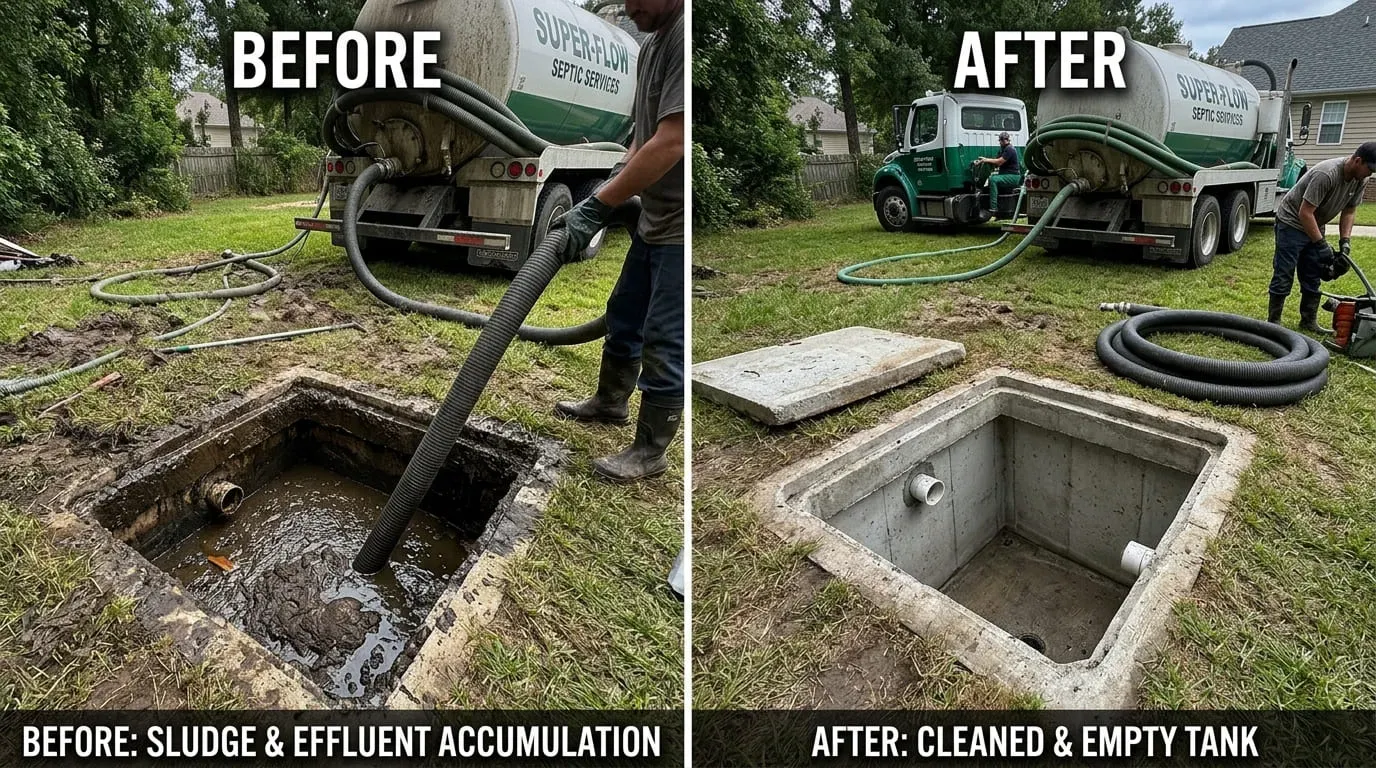
Many customers call because they do not know when the septic tank was last pumped, are unsure whether their home is on septic or city sewer, or are worried about slow drains and odors. After appropriate service, they have clearer records, a practical maintenance plan, and a better understanding of which issue needs attention.
How We Support Septic Pumping, Access, Repair & Replacement Decisions
Safe access, appropriate equipment, and informed recommendations for Lakewood-area wastewater systems.
Septic tank pumping requires more than attaching equipment and leaving. Safe tank access, appropriate pumping procedures, responsible wastewater handling, and accurate communication all matter. Jefferson County explains that wastewater materials that cannot be decomposed must be removed by a licensed systems cleaner and transported to a wastewater treatment plant for disposal.
When septic pumping is paired with plumbing repair, sewer diagnostics, or system component work, Carmody Wood Plumbing explains the role of each service so you can make a sound decision.
- Equipment and pumping procedures selected for the system type, tank access, and approved scope of work
- Careful attention to access lids, risers, landscape conditions, and service-vehicle positioning
- Plumbing and sewer diagnostic tools available when symptoms may be caused by a drain or sewer-line issue instead of the septic tank
- Code-conscious repair and replacement recommendations for related plumbing components, valves, pumps, piping, and access improvements
- Clear separation between routine tank pumping, septic-system inspection, drain-field evaluation, and full system repair
Should You Fix a Septic Problem or Replace a Major Component?
Helping Lakewood property owners choose the right path based on condition, performance, and long-term value.
Pumping removes accumulated solids, but it does not automatically repair every septic-system issue. A damaged tank, failed pump, broken float switch, clogged effluent filter, compromised baffle, cracked pipe, or stressed absorption bed may require a different solution. The best option depends on the actual cause of the problem.
| Scenario | Repair May Be Appropriate | Replacement or Major Correction May Be Appropriate |
|---|---|---|
| Minor plumbing blockage or localized drain issue | Yes, after proper diagnosis | Usually not required |
| Worn float switch or pump-related component | Often, depending on system condition | If equipment is repeatedly failing or obsolete |
| Damaged riser, lid, tee, or accessible baffle component | Often possible | If the tank structure is compromised |
| Cracked tank or severe structural deterioration | Rarely cost-effective | Often necessary for safety and reliable operation |
| Repeated wastewater backup or drain-field saturation | Depends on diagnosis | May require a broader OWTS evaluation or corrective work |
| System no longer meets property needs | Limited adjustments may help | Upgrades may be needed for capacity or code-related reasons |
When replacement may be the right choice:
- The tank body is cracked, collapsed, severely deteriorated, or structurally unsafe
- A pump, alarm, or mechanical component has repeated failures and repair is no longer dependable
- The system is undersized for current property use or cannot perform reliably
- An approved OWTS professional identifies conditions that require broader corrective action
Septic Tank Pumping Costs in Lakewood, CO
Transparent estimates and clear cost drivers for septic cleaning, pump-out, and related plumbing work.
The cost of septic tank pumping in Lakewood depends on the property and the work required. A straightforward scheduled pump-out with accessible lids differs from an emergency request involving buried access, multiple tanks, a pump chamber, a complicated property layout, or a sewage backup that also requires plumbing or sewer diagnostics.
Carmody Wood Plumbing provides clear, property-specific pricing before approved work begins.
- Tank size, wastewater volume, and number of compartments
- Number of tanks, pump chambers, or associated components on the property
- Access conditions, including buried lids, risers, gates, landscaping, slopes, and vehicle distance
- Scheduled maintenance versus emergency septic pumping
- Need for locating, lid excavation, inspection documentation, sewer camera work, drain clearing, or related repairs
- Required parts, pumps, switches, filters, access improvements, or repair labor
| Service Type | Typical Pricing Consideration |
|---|---|
| Routine septic pumping | Tank capacity, access, service timing, and pumping requirements |
| Multi-tank or multi-unit service | Number of tanks, compartments, property coordination, and access |
| Emergency septic backup response | Urgency, after-hours dispatch, contamination risks, and diagnostic needs |
| Septic inspection or pumping documentation | Property-sale requirements, inspection coordination, and report scope |
| Related plumbing or sewer repair | Cause of the problem, parts, labor, and equipment required |
Pricing note: Ask for a written estimate based on your property's conditions. Avoid relying on a generic "septic pumping price near me," because online price ranges often do not account for access, system type, or necessary related work.
$50 Off Qualifying Plumbing Service Repair
Ask about current offer terms, service conditions, and eligibility
Which Lakewood Properties Need Septic Maintenance and OWTS Service?
Understanding whether your property has a septic system, needs pumping, or requires a sewer-line diagnosis.
If your property is connected to public sewer, septic pumping is not the correct service. If it relies on an OWTS, periodic maintenance and pumping are important. The first step is confirming what system serves the property.
You may need septic pumping or an OWTS-related service plan if:
- The property uses a septic tank, onsite wastewater treatment system, pump tank, or absorption bed
- You do not have a recent pumping record or do not know when the tank was last serviced
- You are preparing to sell a home with an OWTS and need to understand inspection, pumping-report, or use-permit requirements
- You have multiple slow drains, gurgling toilets, sewage odors, a septic alarm, or wastewater backup
- You notice wet, soft, unusually green, or odorous ground near a leach field or absorption area
- You are increasing household occupancy, adding bedrooms, operating a home business, or changing water-use patterns
- You need to determine whether a problem is a septic-tank issue, building-drain blockage, private sewer-lateral problem, or municipal sewer concern
Jefferson County provides online public access to many onsite wastewater permit documents, which can help homeowners research a property's OWTS records.
Septic Tank Cleaning for Commercial & Multi-Unit Properties
Protect wastewater operations across your Lakewood-area facility, portfolio, or managed property.
Commercial and multi-unit properties can have higher water use, more complex plumbing systems, tighter operating schedules, and greater consequences when wastewater service is disrupted. Carmody Wood Plumbing coordinates with owners, facility managers, HOAs, landlords, and maintenance teams to plan septic pumping and related commercial plumbing work around operational needs.
| Commercial Service | Description |
|---|---|
| Scheduled septic pumping | Planned pump-out support based on system size, occupancy, and records |
| Emergency wastewater response | Rapid assessment for backups, alarms, overflows, and urgent plumbing concerns |
| Related drain and sewer diagnostics | Camera inspection, drain cleaning, and sewer-line evaluation when septic is not the cause |
| Pump, alarm, and plumbing repairs | Support for associated plumbing and mechanical components |
| Maintenance planning | Service scheduling, property documentation, and future work recommendations |
Commercial Properties We Serve
- Shopping centers, office parks, and managed business properties
- Restaurants, cafés, hotels, and hospitality facilities
- Schools, churches, community centers, and recreational facilities
- Industrial facilities, warehouses, and logistics properties
- HOAs, apartment communities, and multi-property portfolios
Why Commercial Owners Choose Carmody Wood Plumbing
- One plumbing partner for septic-related coordination, drain cleaning, sewer camera inspection, water lines, fixtures, and emergency plumbing
- Capacity to schedule work around tenant needs, business hours, property access, and safety considerations
- Clear documentation for managers, owners, maintenance files, inspections, and future planning
| Commercial Situation | Typical Planning Consideration |
|---|---|
| Multi-unit property | Unit counts, peak water use, shared access, and resident communication |
| Large campus or portfolio | Phased scheduling, building-by-building service, and documentation |
| Restaurant or hospitality site | High-use periods, grease-related drainage factors, and minimized downtime |
| Industrial or warehouse site | Safety procedures, equipment access, and operational coordination |
Benefits of Hiring Licensed Septic Pumping Professionals in Lakewood
Protect your property, wastewater system, and peace of mind with informed professional service.
Helps reduce the chance that excessive solids will move beyond the tank and stress downstream components
Provides a clearer record of maintenance for homeowners, property managers, and future buyers
Helps identify when symptoms may actually point to drain cleaning, sewer camera inspection, or plumbing repair
Supports responsible wastewater handling and property protection
Gives you practical guidance on water use, leaks, garbage disposals, wipes, grease, and other factors that can affect septic performance
Supports Jefferson County use-permit, pumping-report, and property-sale documentation needs
Why DIY or Unlicensed Septic Tank Pumping Is Dangerous
Important reasons to leave septic tank cleaning and wastewater-system work to qualified professionals.
⚠️ Critical Safety Warning
A septic tank is a confined space that may contain dangerous gases, bacteria, oxygen-deficient air, and structural hazards. Never enter a septic tank. Keep children, pets, and untrained individuals away from open lids, wastewater, pump chambers, and suspected failure areas.
Improper pumping, unsafe access, unauthorized wastewater disposal, or incorrect repairs can create serious health, environmental, and property risks. Jefferson County states that septic materials requiring removal should be handled by a licensed systems cleaner and transported to a wastewater treatment plant.
- Tank entry can be fatal because of toxic gases and low-oxygen conditions
- Unsafe lids, damaged access covers, and excavations can create fall or collapse hazards
- Incorrect diagnosis can waste money if the true problem is a sewer line, plumbing drain, pump component, or absorption-bed condition
- Unlicensed or undocumented work may complicate property records, transactions, and regulatory requirements
- Wastewater exposure requires careful handling to protect occupants, neighbors, and the environment
Answers to Common Septic Pumping Questions in Lakewood, CO
Quick, practical answers for Lakewood-area property owners.
How often should I have my septic tank pumped in Lakewood, CO?
Many household septic tanks are pumped about every three to five years, but the correct interval depends on tank size, household occupancy, water use, garbage-disposal use, and solids accumulation. The EPA recommends inspections every one to three years for conventional systems, while systems with pumps, float switches, or other mechanical parts may need more frequent attention.
How do I know whether my Lakewood home has septic or city sewer?
Check your property records, utility bills, title documents, or prior inspection records. Jefferson County also provides online access to many OWTS permit documents. If you are unsure, call with your address and available records so we can help identify the most appropriate next step.
What are the signs that a septic tank needs pumping?
Common warning signs include multiple slow drains, toilet gurgling, sewage odors, wastewater backup, a high-water alarm, or wet and odorous ground near the absorption bed. These symptoms can also be caused by a sewer-line or plumbing problem, so diagnosis matters.
What is the difference between septic pumping and septic tank cleaning?
In everyday searches, "septic pumping" and "septic cleaning" often mean the same core service: removing accumulated tank contents. A complete service discussion should also clarify whether inspection, filter care, locating, lid access, component repair, or drain-field evaluation is included.
Should both compartments of a two-compartment septic tank be pumped?
Yes. Jefferson County advises that both compartments of a two-compartment tank should be pumped.
Do I need septic pumping before selling a home in Jefferson County?
A property sale involving an OWTS may require pumping and inspection as part of Jefferson County's use-permit process. Before closing, the responsible party obtains an approved OWTS inspection and septic-tank pumping/inspection; the county then reviews the materials before issuing the permit. Confirm current requirements with Jefferson County and an approved inspector.
Does Jefferson County require a licensed septic tank cleaner?
Jefferson County states that wastewater materials requiring periodic removal must be pumped by a licensed systems cleaner and taken to a wastewater treatment plant for disposal. Verify the provider's current authorization before booking service.
Can septic pumping fix sewage backing up into my home?
It can help if excessive tank solids or a full tank is the cause, but pumping is not a universal cure. A sewer-line clog, failed pump, blocked filter, damaged plumbing pipe, or drain-field issue can create similar symptoms. Reduce water use and call for urgent professional assessment.
Do septic additives replace regular pumping?
No. Additives do not remove the solids that accumulate in a tank. The EPA notes that regular inspection and pumping remain essential septic-system maintenance steps.
Can rain, snowmelt, or irrigation affect my drain field?
Yes. Saturated soil can reduce an absorption area's ability to accept wastewater. Avoid directing irrigation or roof runoff toward the drain field, repair plumbing leaks, and spread out water-intensive activities when possible.
Can I run laundry or shower during septic pumping?
Ask the service professional coordinating your appointment. In many cases, limiting water use during the service window is sensible so the system can be assessed and pumped safely without unnecessary incoming flow.
What should I avoid flushing into a septic system?
Avoid wipes, paper towels, grease, coffee grounds, medications, harsh chemicals, cat litter, feminine hygiene products, and other non-biodegradable materials. Use water efficiently and repair leaks promptly.
You're Supported from the First Call to Ongoing OWTS Planning
Local plumbing expertise, clear communication, and practical next steps for your property.
Carmody Wood Plumbing is committed to providing clear information, professional coordination, and respectful service for Lakewood-area homeowners and property managers. We explain what we find, outline available options, and help you understand whether septic pumping, drain service, sewer diagnostics, repair, inspection, or further OWTS evaluation is the right next step.
If you have questions about completed work, documented findings, or recommended follow-up, our team will review the service information with you and explain reasonable corrective options based on the property's condition and the approved scope of work.
2392 S Holland St
Lakewood, CO 80227
United States
Licenses & Credentials Supporting Septic-Related Plumbing Work
Credentials that matter for plumbing, drainage, sewer, and wastewater-system coordination.
Septic systems intersect with plumbing codes, drainage systems, wastewater handling rules, and property safety. Carmody Wood Plumbing maintains plumbing credentials that support professional plumbing, drain, sewer, water-system, and related service work.
The company's listed Colorado Master Plumber License, MP.00189979, is shown as active in the Colorado DORA lookup through February 28, 2027.
Colorado Master Plumber
License #MP.00189979
Journeyworker Plumber
Skilled trades licensing
Residential Plumber
Home service licensing
Plumber Apprentice
Registered participation
Backflow Prevention
Cross-connection certification
Commercial & Mechanical
Plumbing specialization
Verify current Jefferson County systems-cleaner licensing or approved OWTS-inspector status when the requested scope includes regulated pumping, transport, inspection, or use-permit documentation.
Emergency Septic Pumping in Lakewood, CO
Rapid guidance when a septic backup, wastewater concern, or related plumbing emergency threatens your property.
24/7 Emergency Response — Call (720) 704-4997
A septic backup or suspected wastewater overflow can become urgent quickly. If sewage is backing up into tubs, showers, toilets, or floor drains, stop using water whenever possible. Do not run the dishwasher, washing machine, or additional fixtures. Keep occupants and pets away from contaminated areas.
Our 24/7 team can help assess whether the situation appears related to septic pumping needs, a blocked main drain, a sewer lateral, a failed pump, or another plumbing emergency.
Emergency Scenarios
- Sewage or wastewater backing up into the home or business
- A septic tank, pump tank, or high-water alarm concern
- Visible wastewater near a tank, access lid, absorption bed, or drain field
- Multiple fixtures draining slowly or gurgling at the same time
- Suspected sewer-line blockage that must be distinguished from a septic issue
Insurance Claim Assistance for Septic-Related Incidents
When a plumbing, sewer, or wastewater issue contributes to property damage, your insurer may request service records. Carmody Wood Plumbing can provide service-related documentation for work completed within the authorized scope — often coordinated with water damage restoration.
- Initial service notes describing reported conditions and visible findings
- Available photographs of damaged plumbing or accessible components when appropriate
- Itemized invoices for completed repair, diagnostic, pumping-coordination, or replacement work
- Written recommendations describing the next steps based on observed conditions
Insurance coverage depends on the specific policy, cause of loss, exclusions, endorsements, deductibles, and insurer review. Review your policy and speak with your insurance agent or carrier about available coverage.
Warranty Coverage for Septic-Related Plumbing Services
| Coverage Type | Description |
|---|---|
| Workmanship | Applicable warranty terms for completed repair or installation labor |
| Parts and equipment | Manufacturer warranty coverage for qualifying new products |
| Service documentation | Records that support future maintenance, inspection, or claim discussions |
Warranty coverage varies by component type, manufacturer, site conditions, maintenance history, system use, and the approved work scope. Ask for the written terms before authorizing a repair or replacement.
10 Fully Equipped Vehicles Serving Lakewood & Surrounding Communities
Diagnostic Equipment
Plumbing, drainage, and sewer-related troubleshooting
Stocked Parts
Common plumbing, drain, pump, valve, fixture, and water-system repairs
GPS-Dispatched
Responsive service across Lakewood, Jefferson County, and surrounding areas
Emergency Capacity
Coordinating septic support with drain cleaning, sewer camera, and emergency plumbing
Flexible Payment Options for Major Septic-Related Projects
- Options may be available for significant plumbing repairs, major component replacements, and larger property improvements
- Coordination with water-heater, sewer-line, drainage, bathroom, kitchen, and related plumbing projects
- Clear explanation of eligibility, terms, payment timing, and project scope before work begins
Financing availability is subject to current program terms, credit approval where applicable, and project eligibility. Confirm details directly with Carmody Wood Plumbing.
Recognition for Service Excellence
National Plumber of the Year
Plumbing Apprentice of the Year
Plumbing Contractor of the Year
Safety First Award
Super Service Award
Senior & Military Discounts on Septic and Plumbing Services
$50 Off
Qualifying plumbing service repairs
$83 Drain-Clearing
On qualifying drain cleaning
Free Camera Inspection
With qualifying drain cleaning service
$150 Off
New water heater installation or upgrade
Free Safety Inspection
In-home plumbing safety inspection
Senior & Military
Discounts on qualifying services — confirm eligibility
Septic Tank Pumping and Emergency Plumbing Hours in Lakewood, CO
Weekly Service Hours
- Monday00:00–23:59
- Tuesday00:00–23:59
- Wednesday00:00–23:59
- Thursday00:00–23:59
- Friday00:00–23:59
- Saturday00:00–23:59
- Sunday00:00–23:59
Contact Carmody Wood Plumbing
Phone: (720) 704-4997
Email: carmodywood@gmail.com
Website: lakewoodemergencyplumber.com
Call 24/7What to Look for in a Lakewood Septic Pumping Provider
| Feature to Evaluate | Carmody Wood Plumbing Approach | Why It Matters |
|---|---|---|
| Local experience | 16 years serving Lakewood and surrounding communities | Familiarity with local properties, plumbing needs, and Jefferson County context |
| Team capacity | 60 professionals and 10 service vans | Supports coordinated scheduling and wider service capability |
| Service scope | Septic-related coordination plus full plumbing, drain, sewer, camera, water-heater, and water-damage services | Helps when the problem is not limited to the septic tank |
| Availability | 24/7 emergency operations listed | Important for sewage backups and urgent plumbing issues |
| Communication | Clear findings, estimates, and next-step recommendations | Helps owners make informed service and maintenance decisions |
| Regulatory fit | Verify systems-cleaner and OWTS-related authorizations for the specific service requested | Essential for compliant pumping, disposal, inspection, and documentation |
Contact Carmody Wood Plumbing for Septic Tank Cleaning & Pumping in Lakewood, CO
Talk with a Lakewood plumbing professional about septic pumping, OWTS records, wastewater backups, or sewer-versus-septic diagnostics today.
If you are unsure whether your property is on septic or public sewer, need help with slow drains or sewage backup, want to schedule preventive maintenance, or are preparing for an OWTS inspection or home sale, Carmody Wood Plumbing is ready to help. Tell us what you are experiencing, share your property address and available septic records, and we will help you determine the most appropriate next step.